Industrial wastewater refers to wastewater and waste liquid discharged during production, which contains industrial production materials, intermediate products, by-products, and pollutants generated during the production process that is lost with water and are an important cause of environmental pollution, especially water pollution.
Industrial water treatment refers to treating water used in industrial production to achieve water quality standards that meet production requirements. This process covers multiple aspects such as physical, chemical, and biological treatments.
Physical treatment mainly removes suspended matter, plankton, and other particulate matter in water through clarification, filtration, precipitation, and ion exchange. Commonly used chemical agents include disinfectants, pH adjusters, flocculants, and chelating agents, which help to purify water quality further. Biological treatment uses biological methods to remove organic matter in water.
The purpose of industrial water treatment is to greatly improve resource utilization efficiency, reduce industrial water pollution to the environment, and achieve the recycling and repeated use of water resources to achieve sustainable development of human society. At the same time, with the rapid development of industry, the types and quantities of wastewater are increasing, and the pollution of water bodies is becoming more and more widespread and serious. Therefore, the treatment of industrial wastewater is particularly important.
Industrial water treatment is an important environmental protection measure that plays a vital role in protecting and reducing the environmental burden.
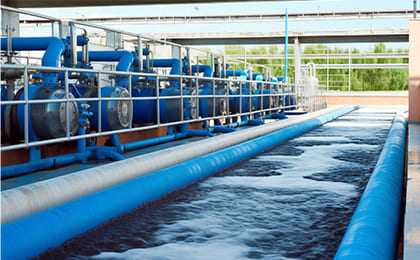
Which industries use industrial water treatment technology?
1. Electronics industry
The production process of the electronics industry is very long, the water consumption is large, and there are many industrial wastewater processes. Therefore, the electronic industry wastewater is a large amount of industrial wastewater. Among them, according to the different pollutant components, it is divided into acidic and alkaline wastewater, metal-containing wastewater (nickel, copper, etc.), organic wastewater, ammonia-containing wastewater, phosphorus-containing wastewater, etc. It contains a large number of heavy metals, cyanide, nitrogen, phosphorus, organic matter, and other pollutants, which are difficult to treat.
2. Lithium battery industry
Lithium batteries are an important part of the modern energy industry and have become indispensable equipment in mobile power supplies and new energy vehicles.
In the production process of lithium batteries, water treatment is used in multiple links. First, the preparation of battery materials requires a large amount of water. If it is not treated, it will not only affect the quality of the product but also have adverse effects on the environment. Secondly, electrode preparation also requires water treatment, including soaking, screening, washing, and other links of raw materials. In addition, solvent recovery also needs to be treated with water to reduce solvent pollution and waste.
The wastewater generated during the battery manufacturing process contains a large amount of toxic chemicals and heavy metals. If it is not treated, it will cause serious harm to the environment.
3. Photovoltaic industry
Photovoltaic wastewater contains water with high concentrations of organic matter and heavy metals. It is difficult to treat and contains toxic and harmful substances. However, because the wastewater contains a large amount of difficult-to-degrade complex organic matter and trace heavy metals, traditional wastewater treatment technology cannot completely remove these pollutants and meet the national emission standards.
4. New energy industry
With the vigorous development of the new energy industry, producing new energy materials has become an important force in promoting social progress and environmental protection. However, the problem of wastewater generated in the production process of new energy materials has become increasingly prominent. It usually contains high concentrations of organic matter, heavy metal ions, acid and alkali substances, and other pollutants, potentially threatening the environment and human health.
5. Chemical industry
Chemical wastewater refers to wastewater produced in the process of producing products in chemical plants, such as oily wastewater from the production of ethylene, polyethylene, rubber, polyester, methanol, ethylene glycol, oil tank area, air separation, air compressor station, etc. After biochemical treatment, it can generally meet the national secondary emission standards. Due to the shortage of water resources, the water that meets the emission standards needs to be further treated in depth to meet the requirements of industrial water replenishment and reuse.
6. Surface treatment industry
As an important part of modern industry, the surface treatment industry will inevitably produce various types of industrial wastewater during its production process. These surface treatment wastewater mainly include pretreatment wastewater, electroplating wastewater, coating wastewater, chemical conversion wastewater, and anodizing wastewater, which contain a large number of pollutants such as acids, alkalis, oils, COD, heavy metal ions, and phosphates. We must adopt scientific and reasonable treatment methods to treat this surface treatment wastewater effectively.
7. Medical and pharmaceutical industry
Pharmaceutical industrial wastewater refers to organic matter, inorganic matter, and microorganisms generated in the pharmaceutical process. Difficulty in degradation: The organic matter in the wastewater is complex and diverse, most of which are difficult to degrade organic matter, such as organic solvents, active drugs, etc. Toxicity: Toxic substances such as drug residues and excipients used in the pharmaceutical process, such as heavy metal ions, chlorides, bromides, etc. Biological: bacteria, metabolites, and fermentation broth produced during the microbial cultivation process in the pharmaceutical process.