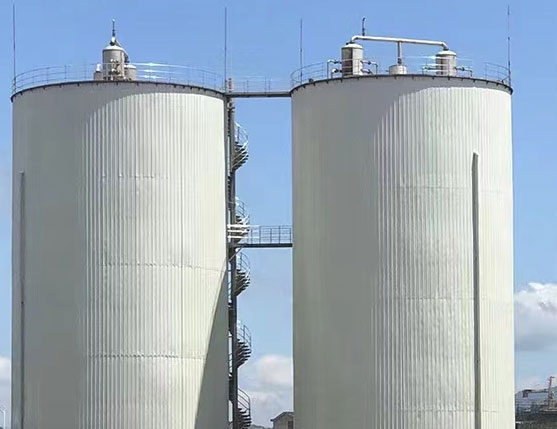
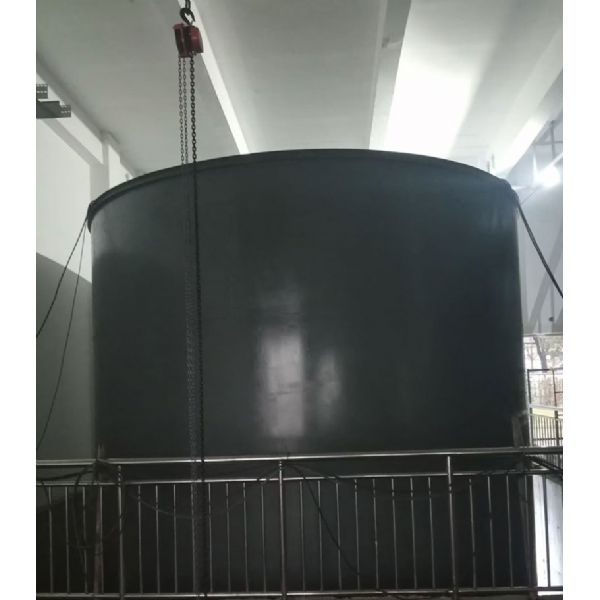
The sewage to be treated flows in from the bottom of the anaerobic sludge bed, and mixes and contacts with the sludge in the sludge layer, and the microorganisms in the sludge decompose the organic matter in the sewage and convert it into biogas. Biogas in the form of tiny bubbles constantly released, tiny bubbles in the process of rising, constantly merging, and gradually forming larger bubbles in the sludge bed at the top of the sludge bed by the sludge gas stirring to form a sludge concentration of thinner sludge and water together into the three-phase separator, biogas encountered in the lower part of the separator reflector plate, the folding of the reflective plate to the reflective plate of the surrounding area, and then through the layer of water into the gas chamber, the concentration of biogas in the gas chamber with a conduit out of the solid-liquid mixture into the three-phase separator, the solid-liquid mixture after reflection. The solid-liquid mixture enters the sedimentation area of the three-phase separator through the reflection. The sludge in the sewage undergoes a flocculation reaction, and the particles gradually increase in size and settle down under the action of gravity. The sludge settled to the sloping wall slides back to the anaerobic reaction area along the sloping wall so that a large amount of sludge accumulates in the reaction area, and the treated water separated from the sludge overflows from the upper part of the overflow weir in the settling area, and then discharged from the sludge bed.