(1) Physical treatment method. The physical method uses physical effects to separate suspended solids in wastewater. Structures such as grilles, mesh screens, oil removal tanks, grit chambers, sedimentation tanks, or reverse osmosis equipment can be set up to separate and recover undissolved suspended pollutants (including oil films and oil beads) in wastewater. Commonly used methods include gravity separation, centrifugal separation, filtration, etc. Physical method treatment is relatively simple and economical and is used in villages and towns where water bodies have large capacity, strong self-purification capabilities, and low sewage treatment requirements.
(2) Chemical treatment method, adding certain chemical substances to the sewage, using chemical reactions to separate and recover pollutants in the sewage. Commonly used methods include chemical precipitation, coagulation, neutralization, oxidation-reduction (including electrolysis) ), etc.
(3) Physical and chemical methods. The physical and chemical method uses physical and chemical effects to remove soluble impurities in wastewater. In recent years, high-gradient magnetic separation has been applied to utilize metal ions or other charged particles in wastewater to exert agglomeration, precipitation, and enhanced separation properties under the action of a magnetic field. It has been used abroad for deep purification of wastewater containing paramagnetic suspended solids, Mainly including adsorption, ion exchange, membrane separation, extraction, etc.
(4) The biological treatment method converts organic pollutants in solution, colloid, and finely suspended states in wastewater through the metabolism of microorganisms into stable and harmless substances. It can be divided into aerobic biological treatment methods and anaerobic biological treatment methods. Treatment method. The degree of treatment by biological methods is higher than that by physical methods. Commonly used methods include the activated sludge method and the biofilm method.
(5) Disinfection method. The disinfection method is mainly used for industrial wastewater and waste liquid containing pathogens, using chlorination disinfection method.
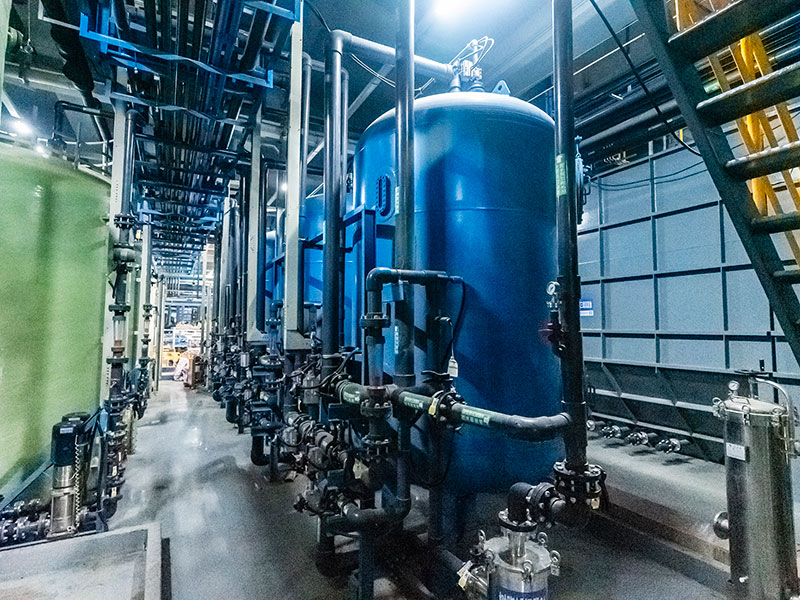
Wastewater treatment process
1. The wastewater first passes through the grille and screen and then flows to the flocculation and sedimentation tank. A coagulant is added to the flocculation and sedimentation tank to achieve a better treatment effect for suspended solids in the wastewater. Coagulation and chemical addition also play a role. The function of regulating wastewater. After flocculation and sedimentation, the wastewater flows into the pre-aeration regulating tank.
2. Air is introduced into the aeration adjustment tank to play the role of pre-aeration adjustment. The evenly adjusted wastewater is lifted to the first-level floating filler biochemical tank with a pump.
3. An aeration head with high oxygenation efficiency is installed in the biochemical tank, and a floating filler is installed. The practice has proved that this technology has a high removal efficiency for COD and BOD. The wastewater in the first-level floating filler biochemical tank flows automatically into the second-level biochemical tank. The floating filler biochemical tank and secondary sedimentation tank adopt the same method.
4. The water in the secondary floating filler biochemical tank flows automatically into the inclined plate sedimentation tank. Adding polypropylene honeycomb inclined tubes to the tank can greatly lessen the effectiveness of sedimentation. In addition, the hydraulic load is high, the residence time is short, and the area is small.
5. The settled sludge in the coagulation and inclined plate sedimentation tank is discharged into the sludge concentration tank and then dewatered through the sludge dewatering machine.
6. The water discharged from the inclined plate sedimentation tank flows into the clear tank and is discharged after testing.
According to the degree of treatment, sewage treatment can be divided into primary, secondary, and tertiary treatment.
(1) Primary treatment mainly involves removing suspended solid matter in sewage, and physical methods are commonly used.
(2) Secondary treatment's main task is to significantly remove colloidal and dissolved organic matter in sewage, with a BOD removal rate of 80% to 90%.
(3) Tertiary treatment is used to further remove certain special pollutants, such as fluorine and phosphorus. It is an advanced treatment, and chemical methods are commonly used.
The first stage
Physical treatment methods are often used in the first treatment stage. Approximately 20 to 30 percent of solid (undissolved) floating and suspended matter is removed here.
Screening: In screening equipment, wastewater is passed through a flat screen or drum screen, and coarse contaminants such as plastics, stones, leaves, and animal carcasses are retained on the screen.
Grit tank: A grit tank is a sedimentation tank that removes coarse impurities from wastewater, such as sand, pebbles, or broken glass, which can settle at the bottom.
Sedimentation tank: Wastewater flows slowly through the pretreatment tank. Undissolved material (feces, paper, etc.) either sink to the bottom (settling solids) or floats to the surface.
second stage
The second stage of public sewage treatment uses biological treatment, which uses aerobic and anaerobic organisms to break down wastewater with high organic content, a microbial degradation process.
The degradable organic components of the wastewater are mineralized as completely as possible. In the case of aerobic wastewater treatment, this means breaking them down into water, carbon dioxide, and inorganic salts such as nitrates, phosphates, and sulfates.
Nitrification is the bacterial oxidation of ammonia (NH3) to nitrate (NO3). Denitrification is the conversion of nitrogen bound in nitrates (NO3) into molecular nitrogen (N2) and nitrogen oxides.
In biological nitrogen removal, the nitrification step is usually completely fine as long as the sludge is sufficiently mature and the oxygen content is sufficient.
On the other hand, the extent and rate of denitrification are highly dependent on the concentration of organic substrates and dissolved oxygen. The nutrient ratio of nitrogen to BOD₅ plays a key role here.
In biological wastewater treatment processes, unfavorable NO/BOD₅ ratios in the influent often require significant expansion of the denitrification tank to re-normalize the ratio to ensure compliance with limits. If it is impossible to expand the tank volume due to procedural or economic constraints, or if the monitored values do not comply with wastewater regulations, these limitations can be eliminated using an external carbon source.
Before anyone even started discussing denitrification, a widely used and process-stable two-stage system for nitrification was planned and constructed. Today, these plants need to eliminate nitrogen by expanding their denitrification capabilities. By isolating a portion of the second stage for denitrification while using an external carbon source, the necessary denitrification can often be achieved in a two-stage system very quickly and with little or no modification required.
The third phase
Abiotic chemical processes use chemical reactions such as oxidation and precipitation without involving microorganisms. They are mainly used for phosphorus removal in public sewage treatment.