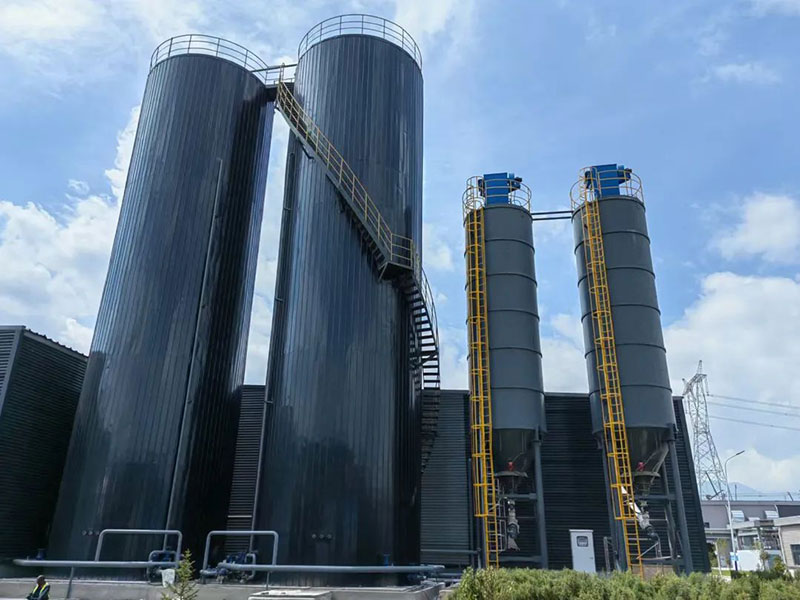
 Xinneng Environmental Fluorinated Wastewater Innovative Process
In the southwest factory of a photovoltaic leader, the industrial park stipulates that the mass concentration of fluoride (F-) should be less than 1.5mg/L. An in-depth discussion of the principle of fluoride removal reveals that the final output of fluoride (F-) indicator of the traditional two-stage chemical precipitation method is usually 8-10 mg/L, which is difficult to satisfy the environmental protection emission requirements. To solve this problem, we have adopted a joint three-stage fluoride removal process combining calcium salt chemical precipitation, aluminum salt adsorption, and coagulation precipitation to treat fluoridated wastewater. At the same time, the sludge formed by secondary precipitation is recycled to the primary defluorination reaction pool for secondary defluoridation to maximize the removal of fluoride, achieve good treatment results, and reduce operating costs.
Addition of coagulant and coagulant aid: Trivalent aluminum salt and anionic coagulant aid are added to the solution, forming CaF2 precipitation. After hydrolysis and condensation to form a polymer, calcium salt neutralization produces calcium fluoride precipitation adsorbed by the colloid, forming a coarse floc. When the dosage is large enough to rapidly precipitate metal hydroxide or metal carbonate, the colloids and fine suspended matter in the water are caught by the nuclei or adsorbent in the formation of these precipitates, which promotes the formation and growth of calcium fluoride precipitation particles to form flocs, which are then deposited at the bottom of the sedimentation tank and discharged to the sludge tank through the sludge scraper.
Tertiary defluoridation: Polymerized aluminum chloride and polyacrylamide are added in the third defluoridation section to further reduce the concentration of fluoride in the water by adsorption of polymerized aluminum chloride to ensure that the effluent fluoride meets the standard.
Sludge recycling: the effect of treatment relying solely on adding calcium hydroxide is not ideal, mainly because of the difficulty in generating the nuclei formed by induced precipitation. To improve this situation, we will have formed CaF2 precipitation as a crystal seed added to the treatment process, which is conducive to the formation of subsequent precipitation, which can save the cost of calcium salt injection but also reduce the total hardness in the water, thereby reducing the later comprehensive utilization of wastewater treatment costs. The sludge formed in the primary and secondary sedimentation tanks contains a large number of unutilized calcium salts and CaF2 precipitation, and we pump some of the calcium fluoride sludge in the sedimentation tanks back to the primary and secondary defluorination reaction tanks for reuse according to the water quality pH and fluoride concentration. Through such sludge reflux measures, we can reduce the use of calcium hydroxide by 10% to 15% and, simultaneously, reduce the effluent's hardness from the tertiary precipitation tank by 20% to 30%.
It is an efficient and practical method to treat fluoridated wastewater from photovoltaic enterprises using calcium salt precipitation. With this treatment, the fluoride removal rate is extremely high and can reach below 1.5 mg/L. This result is due to the unique design of the tertiary system, which can effectively reduce the fluoride concentration in the effluent. During the treatment process, sludge reflux makes the treatment effect even more significant, while the effluent fluoride ion concentration is always kept below 1.5 mg/L.
Under the condition of constant addition of flocculant and coagulant aid, we found that the pH value of fluoridated wastewater, influent F-concentration, and retention time would affect the fluoride removal effect. This provides new perspectives and entry points to optimize the treatment process of fluorinated wastewater from photovoltaic enterprises.