The membrane reclaimed water reuse system we mainly recommend can be graded and reused according to user needs until the wastewater reaches zero discharge.
Application:
·Petroleum ·Chemical ·Coal Chemical ·Pharmaceutical ·Coking ·Electroplating
Processing flow:
The entire treatment process is divided into four parts: pretreatment part, secondary treatment part, deep membrane treatment part, and concentrated liquid treatment part. The main treatment principle is first to remove some pollutants through pretreatment through the pretreatment system, then remove some organic matter through secondary treatment, and finally conduct membrane concentration treatment on the wastewater after secondary treatment through membrane concentration.
Our Solutions:
To meet these challenges, zero-discharge technology usually requires a combination of multiple treatment processes to achieve complete wastewater purification and resource recycling.
Preprocessing
- Physical method: including grilling, sedimentation, filtration, etc., to remove suspended solids, grease, etc. in wastewater.
- Chemical method: adjust the pH value and use coagulants to remove suspended solids and some dissolved organic matter.
Subject processing
- Biological treatment: such as activated sludge method, MBR, etc., mainly used for biodegradation of organic matter.
- Advanced oxidation, such as ozone oxidation, Fenton reaction, etc., for refractory organic matter.
Membrane separation technology
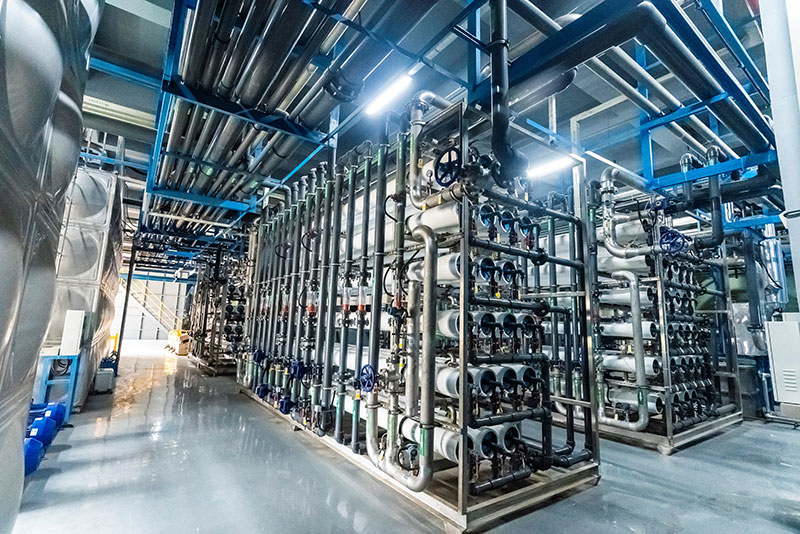
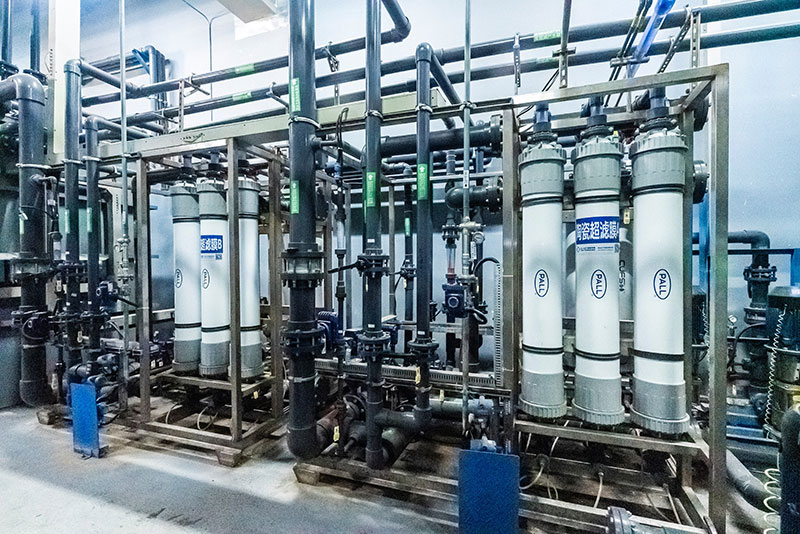
- Reverse osmosis (RO): The core step effectively removes dissolved salts, organic matter, and some microorganisms in water.
- Nanofiltration (NF) and ultrafiltration (UF) are used as RO pre-treatment or subsequent fine treatment to remove macromolecular organic matter or particles.
Concentrate treatment
Evaporation and crystallization: The most common way to process concentrated liquid is to heat and evaporate it and finally separate the salt through crystallization.
Electrodialysis, forward osmosis, is an auxiliary technology used to further concentrate the solution and reduce evaporation energy consumption.
Zero emission system design essentials
System integration: To carry out system optimization design, wastewater characteristics, treatment costs, energy consumption, and other factors must be comprehensively considered.
- Energy recovery: In high-pressure operating units such as RO, energy recovery devices are applied to reduce energy consumption.
- Salt management: Properly dispose of crystallized salt to avoid secondary pollution and explore ways to utilize salt resources.
Advantages and features of Xiner:
1. Be involved in a wide range of zero-discharge treatment industries and have sufficient experience;
2. The container assembly system can carry out multi-level free series/parallel assembly to facilitate overseas transportation;
3. Strong adaptability, capable of grading process settings according to different customer requirements;
4. Design the high-power concentration system and evaporation system by yourself, and the service life of the equipment will be more than 5 years;
5. The system operation cost is low, and the conventional zero-discharge process can save 30% of the operation cost;
6. The system failure rate is low, with the annual failure rate less than 5%;
7. The system is prone to low wear and tear. It comes with a one-year supply of consumables and wearing parts, eliminating the need to buy accessories.
Our implementation:
Semiconductor company
Project Introduction: The nitrogen and phosphorus wastewater treatment system generated during the production process, electroplating wastewater treatment, and all the wastewater after treatment are reused to prepare raw water for the nitrogen and phosphorus pure water and ultrapure water systems. The construction of multiple sets of ultrapure water has been completed, and the water quality of the water supply has reached the standard for the first time.
Water index: resistivity ≥ 18.2MΩ·cm, TOC ≤ 10ppb
Main process:
Pretreatment + biochemistry + MBR + multi-stage membrane separation + evaporation crystallization (zero emission)
Pretreatment + two-stage RO + EDI + polishing and fine treatment + terminal filtration (ultrapure water)