Xinner Environment is an environmental enterprise with 20 years of experience. It began to lay out ultra-low emission technologies in 2010 and has formed rich technical strength and many engineering examples in the ultra-low emissions of COD, TN, F, and TP. , Xiner has a unique understanding of ultra-low emission technology. It has been successfully applied in the Qinghai Trina Solar project, solving bottleneck environmental issues for the company's development.
Our Solutions:
TN: the incoming water TN is as high as 3000 ppm. It is treated by: 1. High-efficiency denitrification tower and the TN removal efficiency reaches more than 90%. 2. After subsequent conventional AO treatment, TN reaches 45 ppm. 3. Finally, it is processed by an aerated biological filter, and The denitrification filter process directly reduces TN to 10ppm. The system operating cost is only 12 yuan/kgTN, 40% lower than the operating cost of traditional industries. The system operates efficiently and stably.
COD: the inlet water COD is 500ppm. After passing through: 1. Traditional AO process, the removal effect is 90%; 2. After ozone oxidation + aerated biological filter and denitrification filter process, the final effluent COD is 25ppm and can be maintained year-round. Maintain this discharge level and meet the direct discharge standards of sewage plants.
F: The fluoride in the incoming water is 1000ppm. It has gone through: 1. A two-stage coagulation and precipitation defluoridation process to reach 10ppm, with a removal rate of 99%; 2. After deep defluoridation (high-efficiency iron-based defluoridation agent), the effluent will be The level of fluorine is maintained within 1.0PPm and is stable for a long time.
Ultra-low emissions require more advanced and efficient water treatment technology. Some attainment technologies include:
1. Biofilm reactor (BMR) technology: uses mobile carriers to attach biofilms to treat sewage efficiently and stably;
2. Reverse osmosis (RO) technology: using advanced membrane separation technology to remove dissolved organic matter and inorganic salts in water efficiently;
3. Advanced oxidation technology (AOP) efficiently degrades organic matter and color pollutants in water through physical and chemical methods such as electrolysis, ultraviolet rays, and ozone.
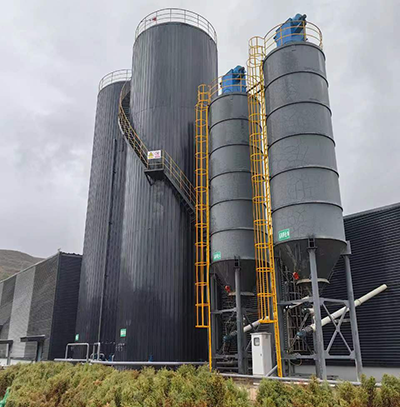
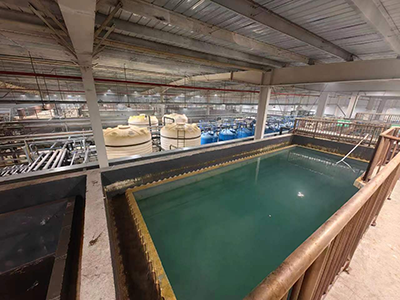
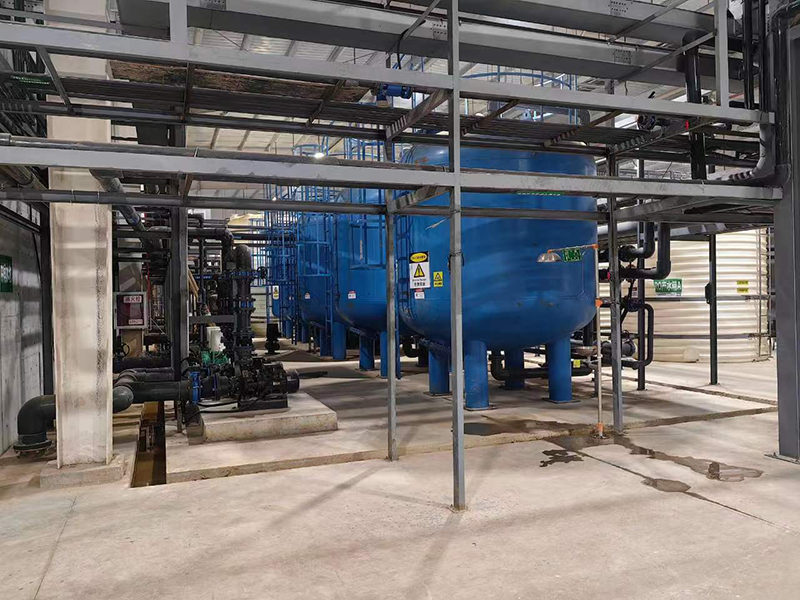
Our implementation:
Solar Project
The project mainly includes comprehensive wastewater, spray wastewater, alkali-containing wastewater, nitric acid wastewater, DAS process wastewater, silane combustion wastewater, etc.
Project scale: 7000m³/d
Effluent indicators: COD ≤ 70, ammonia nitrogen ≤ 10, total nitrogen ≤ 15, fluoride ≤ 1.5